Celebrating 50 Years of The Heart Trust
Established in 1976, The Heart Trust exists to accelerate access to world-class cardiac care for the Waikato and beyond.
By providing seed funding for innovative technologies, equipment, and services, for 50 years, we have helped bring life-saving advances to patients sooner.
When traditional funding pathways are unable to keep pace with medical innovation, The Heart Trust helps bridge the gap—turning possibilities into realities for our communities.
50 Years of Real Results
1976
The Heart Trust was established on 31 August 1976, with the initial aim of facilitating the development of Cardiac Surgery at Waikato Hospital.
1979
Ambulatory Monitoring
The Heart Trust’s very first purchase in 1979 was a Holter Monitor system, allowing heart rhythm problems to be diagnosed while patients were at home or going about their daily lives. Read more.
1980
Electrophysiology and Ablation
Since 1980, The Heart Trust has sponsored cutting-edge Electrophysiology equipment at Waikato Hospital, enabling world-first procedures and the recruitment of leading specialists. With support from the Trust, Prof Martin Stiles has built Waikato into one of New Zealand’s top centres for Electrophysiology, Ablation, and Pacing, giving Midland patients access to world-class care for heart rhythm problems. Read more
1984
Injector for Cardiac Catheter Laboratory
When the lab was moved from Level 4, Waiora Waikato building, to Level 2 in 1984, the planners had neglected to budget for an injector for X Ray contrast (“Dye”) to be used during cardiac catheter procedures. The Heart Trust came to the rescue with ($25k). This equipment was used several hundred times a year for over 14 years!
1989
Echocardiogram- Ultrasound scan of the heart
As part of The Heart Trust’s contribution to the development of cardiac surgery, The Trust provided one of the first two colour doppler echocardiograph machines. Two-dimensional echocardiography had been around since the 1970s and allowed, for the first time, images of the functioning heart muscle and valves to be seen without the need to put tubes in people’s hearts. The major advance in the 1980s was the ability to view the flow of blood through the heart using colour doppler. This is particularly useful for viewing leaking valves. Colour doppler echocardiography is part of the standard of care in cardiology today. The machines in use at Waikato Hospital today are the successors of the original machine provided by The Heart Trust in 1989.
1998
Newborn Unit
In 1998, the Heart Trust purchased an echocardiograph machine for the Neonatal Intensive Care Unit at Waikato Hospital. This machine was used for checking the hearts of all babies in the Neonatal intensive care unit, as well as checking cerebral blood flow in neonates.
Dr Phil Weston, Clinical Director Paediatrics: “The echo machine donated by The Heart Trust absolutely revolutionised our management of babies in the Neonatal unit. We used it every day for at least 12 years before the DHB replaced it with an updated version. Babies come to us from all over the Midland Region and often from other parts of NZ as well.”
2008
Trans Catheter Aortic Valve Implantation (TAVI)
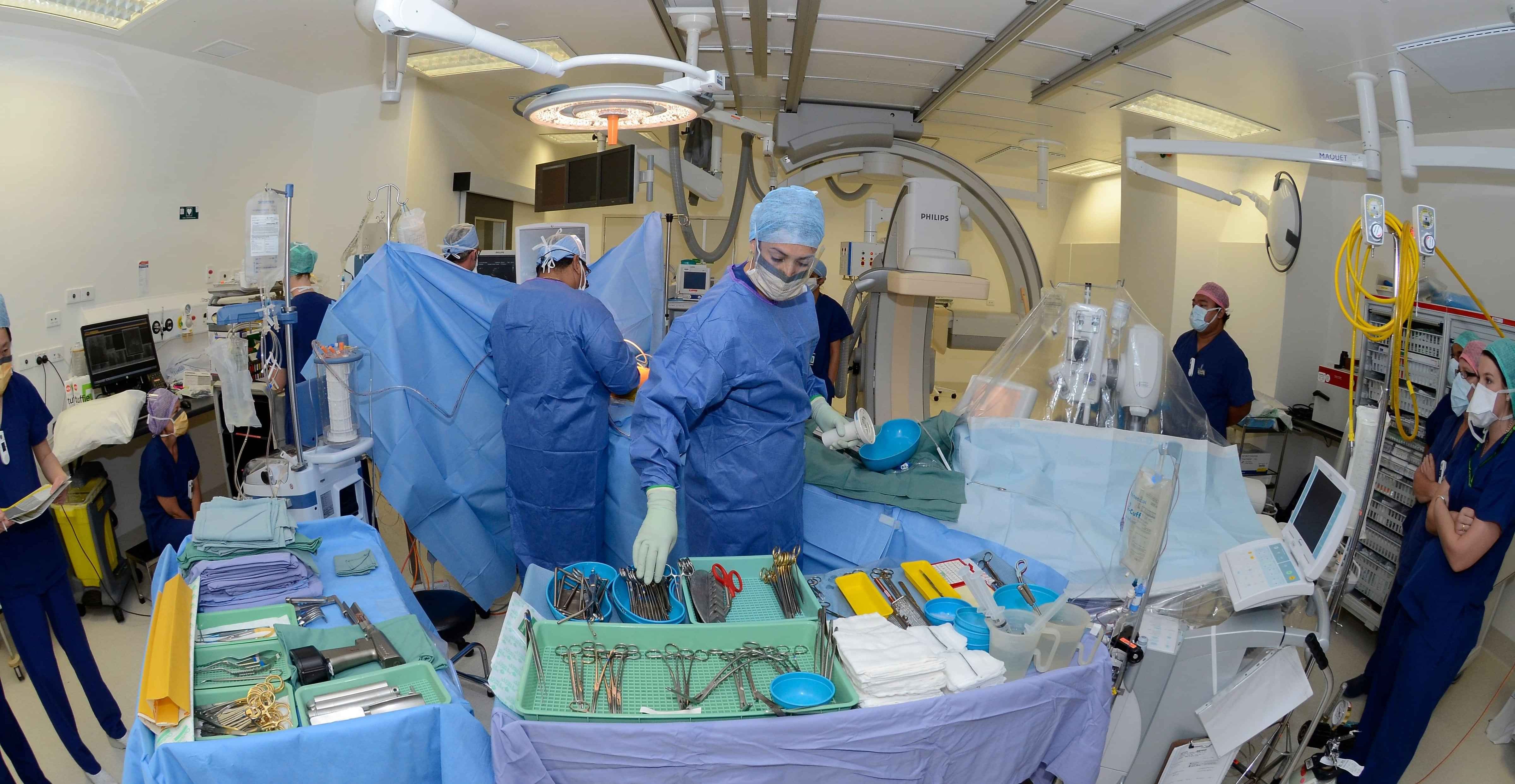
In 2008, The Heart Trust helped introduce Transcatheter Aortic Valve Implantation (TAVI) to New Zealand, funding a pilot program at Waikato Hospital when no public funding was available. Led by Dr Sanjeevan Pasupati, Waikato performed the country’s first TAVIs, paving the way for all public hospital TAVI programs that followed. This breakthrough has transformed care for patients unsuitable for open-heart surgery and opened the door to other advanced cardiac procedures. Read more.
2016
The Heart Trust underwent a brand refresh.
2023
Nurse Led Endoscopic Vein Harvesting
Coronary artery bypass surgery involves using an artery from behind the breastbone or arm, and often some vein from the leg as well. Surprisingly, it is the long incisions on the leg that cause patients more bother than the big chest wound.
In November 2023, The Heart Trust sponsored two nurses from Waikato Hospital to travel to Australia to learn a “keyhole” technique for harvesting leg veins for bypass surgery. The service was established in May 2024 and has treated over 250 patients. Read the RNZ Article
Waikato Hospital's First ECMO Machine
The ECMO machine is similar to a cardiopulmonary bypass machine which “takes over” for a patient’s heart and lungs, adding oxygen to blood before pumping it back. It is used during some heart and lung surgeries or to assist recovery from heart or lung damage by allowing those organs to rest. During the peak of the COVID-19 pandemic the ECMO machine proved valuable as there was an increased use of cardiopulmonary bypass machines outside of the operating theatre.
The Heart trust successfully fundraised for the $120,000 ECMO device across a number of events, including a concert featuring Dr Madhav Menon, a cardiologist at Waikato Hospital, who sang accompanied by his talented daughters performing on the violin and cello. Read the Waikato DHB Newsroom article here.
2026
The Heart Trust celebrates 50 years of bridging the gap in government funding for Cardiac Services at Waikato Hospital
Here's to another 50 Years of supporting cardiac services of the Midland region
The Heart Trust's impact is impossible to measure, by bridging the timing gap between availability of modern technology and the arrival of government funding, we provide faster access to modern technology for the Cardiology department at Waikato Hospital. Impacting the lives of cardiac patients across the Waikato and Midland region.

Email: info@thehearttrust.org.nz
Phone: 027 311 5414
Address: 14 Horne Street, Hamilton 3204