Trans Catheter Aortic Valve Implantation (TAVI)
Narrowing of the aortic valve is common in older people, but many of these patients are not suitable for open heart surgery and must put up with significant symptoms and often frequent hospital admissions.
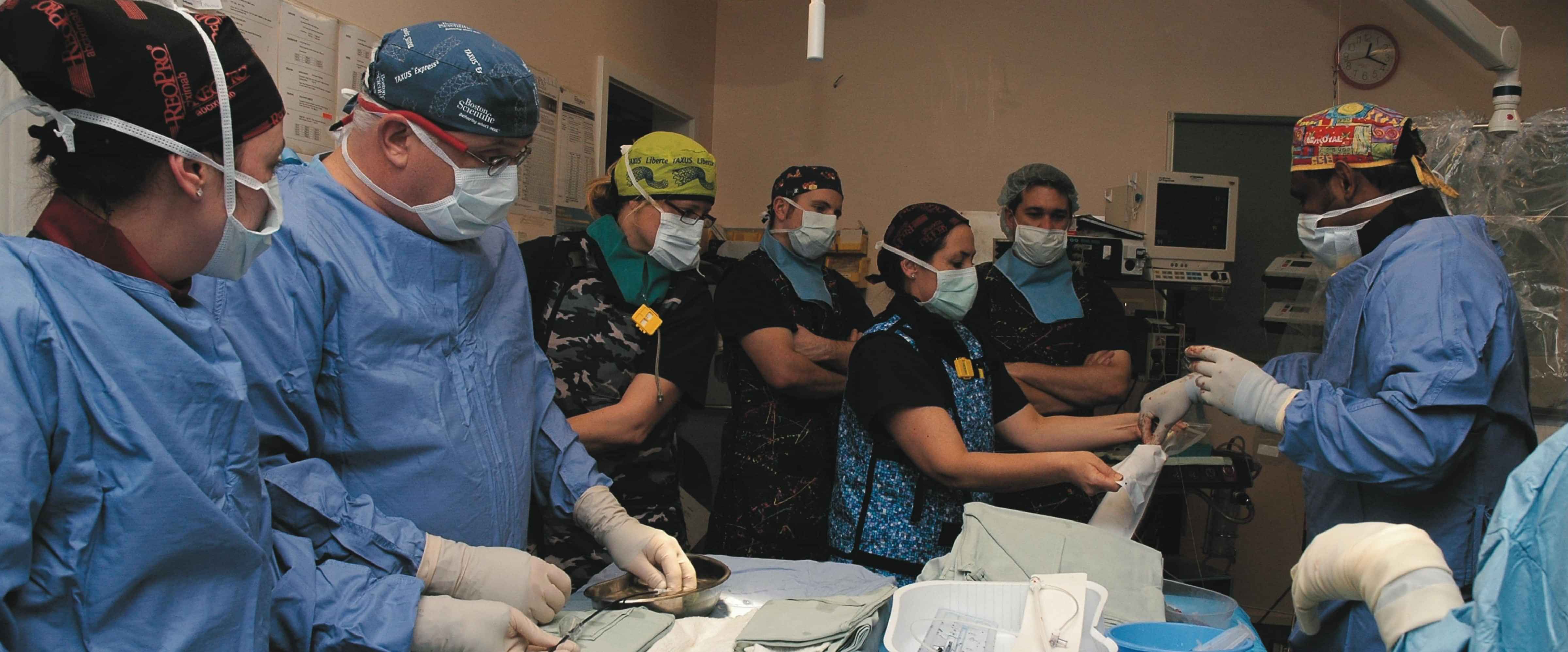
In 2006, it was becoming apparent that avoiding open heart surgery and inserting a valve through a vein in the leg would offer significant benefits for the patient and reduce hospital admissions. This procedure was not available in NZ at this time. A New Zealander – Dr Sanjeevan Pasupati was training overseas and indicated that he would be prepared to come to Waikato Hospital if it could be guaranteed that a TAVI program would be set up.
While the procedure would use existing resources, the valves cost $40,000 each, which the hospital could not fund at that time. The Heart Trust approached the DHB with a proposal for a pilot study on 12 patients, with The Heart Trust paying for the valve itself and the hospital the other costs. The hospital would take over the program if the trial was successful.
The first 3 TAVIs in public hospitals in NZ were carried out at Waikato Hospital in September 2008. The Ministry of Health were not pleased as their permission had not been sought. A committee was set up to investigate whether TAVIs should be done in NZ or not. The committee was disbanded after eight years, without making a decision! (This goes to show that local initiatives, such as those by The Heart Trust, can move much faster than the bureaucracy!) Meantime, other public hospitals were able to start programs. It is fair to say that all TAVI programs in public hospitals in NZ owe their existence to the initiative of The Heart Trust.
1300 TAVIs have been carried out at Waikato Hospital and 200 at private hospitals in Hamilton – all as a direct result of The Trust’s actions.
The benefits to Waikato Hospital and the region have not been confined to TAVIs. The creation of a TAVI capability meant that other possibilities opened up, such as hybrid procedures (see below) – one of the new cardiac labs being developed was converted to a hybrid lab with biplane imaging. With the now available technical skills, such things as septal ablation and device closures of ASDs and atrial appendages were able to be undertaken as well

Email: info@thehearttrust.org.nz
Phone: 027 391 5854
Address: 14 Horne Street, Hamilton 3204